If you’re new to this newsletter, click here to access the rest of my newsletter articles such as the “Why We Passed on this Startup” series, reflections on investing, and tactics on winning in the market. Now, onto today’s post!

A news headline has been making the rounds recently. At the end of August, NVIDIA agreed to acquire Hugging Face for a staggering $12.9 billion.
That’s impressive. But one angel investor in particular won, big time.
According to Yahoo Sports, NBA superstar Kevin Durant was an early angel investor in Hugging Face, and he will reap an approximate $60 million payday following NVIDIA's acquisition of the company.
Joe Pompliano, in a post on X, noted that, "That is one of the best athlete investments ever. And more money than Durant will make playing in the NBA this season."
One of the article headlines says that “Kevin Durant Bet Early on Open-Source AI.”
But, that’s not true. No he didn’t.
The truth is, Hugging Face was a $12.9 billion exit that Kevin Durant found himself a part of.
It’s a story that shows the importance of access and systematic allocation. But also, that sometimes wins come from the startups that are outside of your investment thesis.
What is Hugging Face?
For context, Hugging Face is an AI/machine learning platform that is similar to GitHub of machine learning. It provides open-source tools and a collaborative hub for building, sharing, and deploying AI models.
Kevin Durant runs a family office called Thirty Five Ventures (35V). Through that context, Durant and his business partner Rich Kleiman, invested in Hugging Face’s 2017 seed round with a $100,000 check, and the 2018 Series A round with another $150,000.
According to Joe Pompliano’s post on X, Durant’s combined $250,000 total investment turned into an estimated ~$60 million+ payout upon Nvidia’s acquisition.
Is Durant an AI Sensei?
The news media highlighted $60 million payday, but left out what I as a startup investor immediately had questions about...
Did Kevin Durant, the NBA superstar, invest in Hugging Face because he had an inside track and insight into the future of the AI revolution? What did he see coming?
I mean, did Kevin Durant actually have the foresight to invest in a world-changing AI startup in 2017, five years earlier than OpenAI publicly released Chat GPT for the first time in November 2022?
I didn’t buy it. No way. I’m sure Durant is a smart guy, but this investment seemed a bit too technical for him, to be honest.
Something seemed amiss. I had to investigate.
I asked, “Does Kevin Durant really do these types of investments?”
The 35V website states that they have invested in 100 companies.
A quick look at 35V's actual portfolio shares abount their thesis, which more in line with what one would likely expect from Kevin Durant. PitchBook and 35V's public track record show a clear focus on B2C, sports tech, consumer goods, digital media, e-commerce, and entertainment. Durant’s business partner, Rich Kleiman, built his career in music production, record labels, and sports media (Roc Nation).
So, where does deep B2B machine learning infrastructure fit in?
It doesn’t.
Hugging Face, the AI / machine learning infrastructure platform, was completely outside 35V's sweet spot. The investment didn’t make sense.
The Twist in the Story
But here is the missing link.
✅ The Hugging Face that exited to Nvidia in 2026 is way different than the Hugging Face that Kevin initially invested in in 2017.
In 2017, Hugging Face was a totally different company - it was an AI-powered chatbot for teenagers. ✅
According to one website, “[The founding team’s] vision for the product was a digital friend that was entertaining enough for people to have fun talking to it.”
In 2017, Hugging Face was a B2C social media app.
In 2019, it pivoted to an opportunity that the founding team saw on the horizon in the field of Natural Language Processing. Google released a paper which conceptualized the architecture of “transformers” which, to put it plainly, enabled machines to understand a word in the context of the words around it. These “transformers” were highly conceptual and not useable to the average developer. So, Hugging Face, the AI-powered chat bot company, saw more promise in this market problem and pivoted to building out an open-source library of transformers. (See article).
When 35V wrote their initial seed check, Hugging Face was a social media play. fit 35V's B2C, sports, media thesis perfectly. Upon the first look and conversation, when Hugging Face was a social media play, 35V’s reaction probably was, “This fits our thesis.”
But in 2017, if Hugging Face were a “AI infrastructure play,” I’d imagine that 35V would say, “This doesn’t fit our thesis.”
✅ Hugging Face was a $12.9 billion exit that Durant found himself a part of.
Yet at the beginning of the journey, he thought he was investing in a different company. ✅
Wild.
Good Opportunities Often Defy Thesis and Logic
But Durant’s $60 million payday underscores an important point that both founders and investors need to understand:
Good opportunities often defy thesis and logic.
✅ Of all of the 100 early stage investments that Kevin Durant made in B2C, sports tech, consumer goods, digital media, e-commerce, and entertainment,
the outsized winner was to be found in a startup that ended up:
outside of his investment thesis…
outside of his assumptions of where opportunity actually was...
outside of the profile of what he considered an investment that made sense for him. ✅
This brings up an important point that,
When an investor is deciding to invest in a startup, generally, one tends to pick ones that are within thesis, ones that fit the profile of the startups that they think will be successful, that fit the assumptions that we bring to the table.
Consequently, they tend to avoid the ones that are harder to understand, or are outside of their expertise, or don’t have the pieces in place yet, or we foresee the market moving in a different direction, or a host of other variables that one extrapolates.
For example, I spoke with an investor recently that told me, “I have a hard time with pre-revenue startups.”
I want to underscore the true reality that, as the example of Kevin Durant shows, one needs to be aware of the fact that great opportunity can and often does exist outside of our thesis, outside of the assumptions where we think opportunity is, and outside of the profile of that we are comfortable with.
Sometimes we just need to reach out and learn more.
Getting EVEN
I will share one example out of many that I have on how startups have defied my logic, thesis, and assumptions. I think about this below incident a lot, which has shaped the way that I look at startup opportunities since the moment it happened.
It’s the story of a company that eventually became our 19th portfolio company, EVEN.
Unlike the Kevin Durant story, this company didn’t change because of a pivot. If I’m being honest, the reality of the company was totally different from what I originally assumed the company was.
In April 2023, I read a news article about a company named EVEN. I read about how VC 414 in Milwaukee led a $2.2M pre-seed round for the company. The article here listed EVEN as a “music streaming platform.”
When I read that, do you know what I thought?
I thought, “The world doesn’t need another Spotify.”
I put EVEN in the same category as Spotify, Apple Music, etc. That it was a me-too type company with the same business model as Spotify. I carried this assumption for a year and a half, not realizing that my assumption was actually erroneous.
In June 2024, one year later, through one of our investor deal flow channels, I saw that EVEN was raising a funding round.
Keep in mind, I held the assumption that EVEN was probably just another Spotify competitor, and that the world didn’t need another Spotify and its business model.
But that’s when I did something that defied all of my logic about the situation.
Despite those assumptions, I still decided to reach out to Founder and CEO Mag Rodriguez… just in case my assumptions were incorrect.
I reasoned, it’s better to give ourselves the opportunity to invest rather than to decline the opportunity without true knowledge of what it entails.
Upon the first conversation with Mag, I realized how faulty my original assumption was, and how tremendous an opportunity EVEN actually was bringing to the world. (For more details, read the article on Why Tundra Angels Invested in EVEN)
Streaming platforms such as Spotify or Apple Music are predicated on needing a high volume of fans for artists to make a livable wage. EVEN makes it possible for artists to get paid what they are worth without needing a global following.
EVEN is a model where artists can monetize their music and content first on EVEN directly to their fans, before going onto streaming platforms where they are making fractions of a penny per stream.
Mag posted once on LinkedIn: “This week, an artist with 200,000 monthly listeners (about $700/month) on Spotify earned $28,000 on EVEN in just 24 hours—all thanks to the support of 1,000 dedicated fans.
An artist making $700 a month with Spotify earned $28,000 in 24 hours on EVEN.
Stories like this are happening every day. Artists are earning orders of magnitude more money that they ever though possible - not because they all of a sudden became good at their craft, but because EVEN’s business model was actually one that worked tremendously in their favor.
In February of this year, EVEN announced a partnership with Universal Music Group, which owns over 30% global music market share, to be the label’s exclusive D2C infrastructure for their artists to sell their music direct-to-fan.
Tundra Angels has invested in EVEN over several rounds over the last few years. Many Tundra Angels investors have been able to participate along the way and join the enthusiasm for what EVEN is doing and the great future ahead.
But none of that would have happened were it not for the intentional decision to defy my own logic, and reach out to Mag Rodriguez anyway.

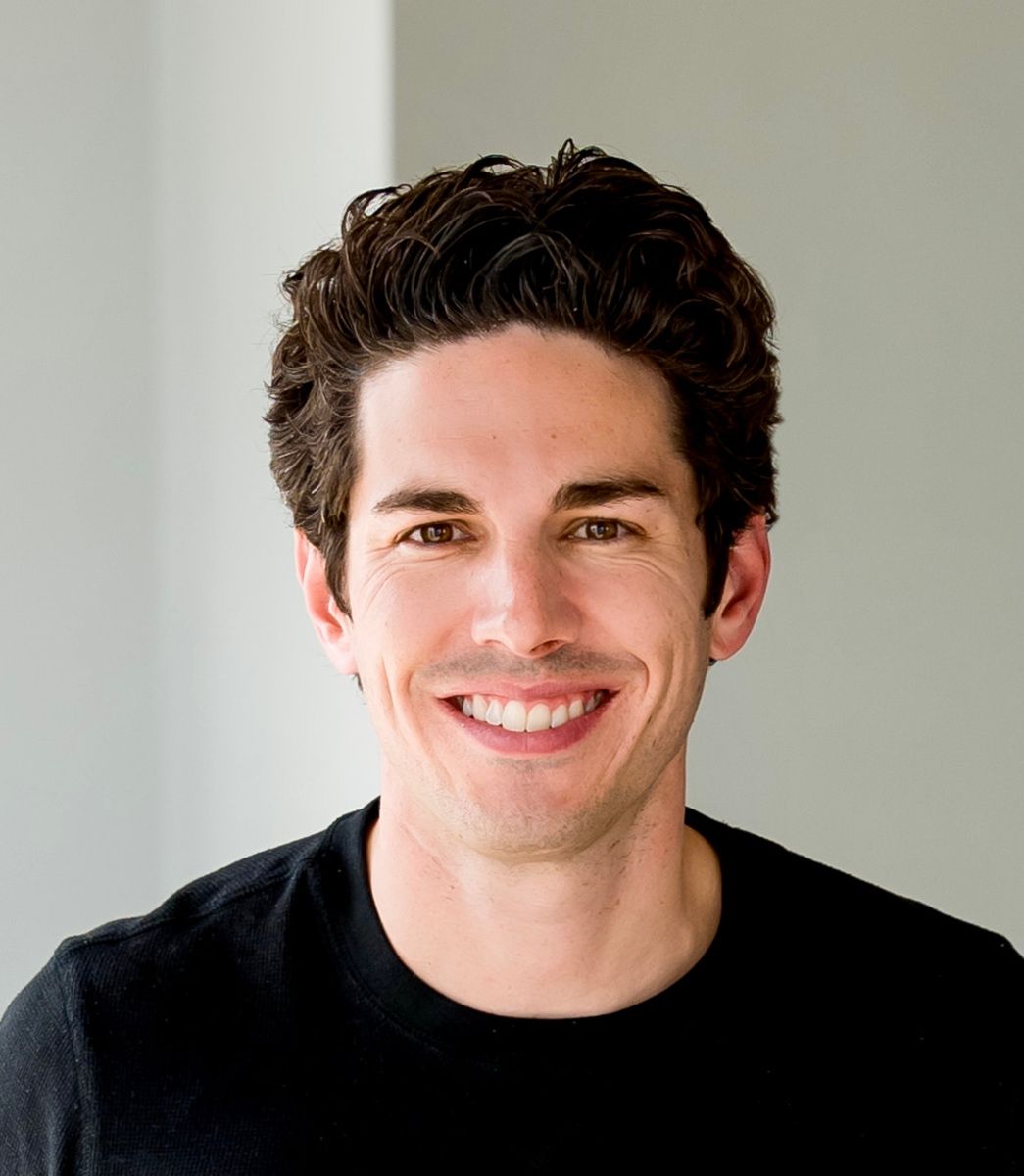
Mag Rodriguez, Founder and CEO of EVEN
Closing Thoughts
Kevin Durant’s $60 million startup payday came from the startup that Durant wouldn’t have chosen and was outside of the thesis, were the company to exist in its actual form when he initially invested.
Thus, one a mindset that transcends thesis, profile, logic, and assumptions of where opportunity is… and where opportunity isn’t.
Let the lesson of Kevin Durant’s $60 million payday shows that his outsized winner was to be found in a startup that ended up:
outside of his investment thesis…
outside of his assumptions of where opportunity actually was...
outside of the profile of what he considered an investment that made sense for him.
Hugging Face was a $12.9 billion exit that Kevin Durant found himself a part of.
But you don’t need to stumble into success accidentally. Be aware of the fact that great opportunity can and often does exist outside of our thesis, outside of the assumptions where we think opportunity is, and outside of the profile of that we are comfortable with.
Sometimes we just need to reach out and learn more.
Click here to access the rest of the newsletter articles.
Here are some of the recent ones!


