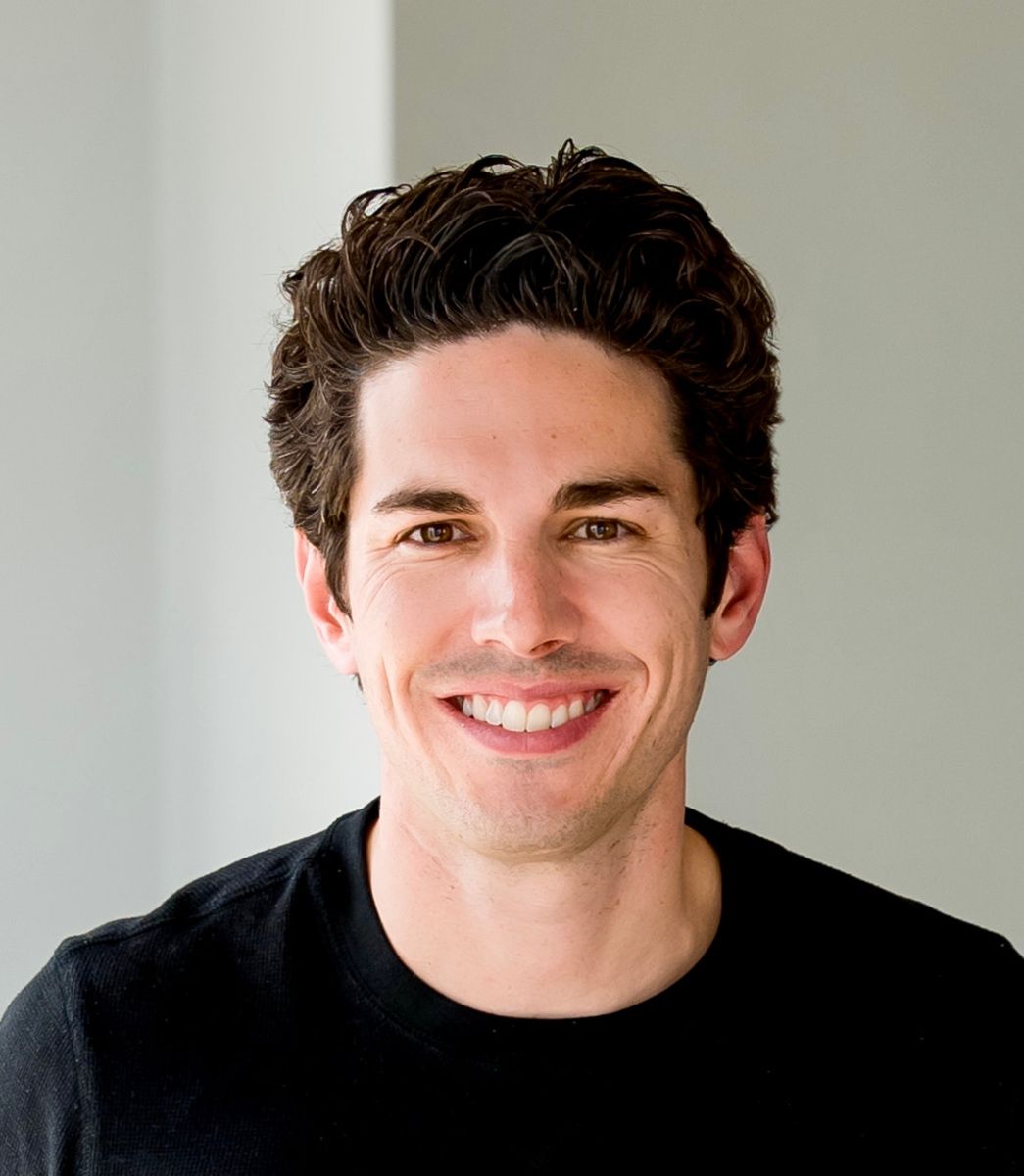
This is my 35th post of the Tundra Angels’ Angle to date!

Hit this link to read more issues across many topics such as fundraising, product, other issues of “Why We Passed on this Startup,” VC rejection email breakdowns, and a ton more!

If you have ideas, feedback, comments, or questions, or want to send along some me some VC rejection emails that you want me to breakdown, reply to this newsletter to hit me via email or complete this form.

Would love to hear from you!

-Matthew

Once upon a time, I met a startup team.

I met David, the CEO of XYZ Company, as I saw him present his pitch on a panel.

David had stellar credentials. He had gone to a top business school and came from the broader industry of XYZ Company.

This person captivated the room when they spoke. Their salesman-ship was very apparent. The kind of CEO that would excel giving a keynote at an industry conference.

In conversation with David afterward, I discovered that XYZ Company was fundraising. So, I scheduled a follow up Zoom call.

The First Zoom Call

The company’s product was a physical product that required a manufacturing process to create.

The company had proven their technology at a lab scale, but they had not yet sold any product to any customers, let alone scaled up their technology.

I asked about the fundraise.

David: “We intend to raise $750,000. The use of funds is operations, hiring a CTO, and commissioning a third party to do a design study for the manufacturing plant.

I thought to myself, a design study for a manufacturing plant?

That hit me weirdly.

I recalled the stage of the company - they had proven their tech at lab scale, but not yet sold any product to customers.

I asked the CEO again, “A design study for a manufacturing plant?”

David: “Yes.”

Leaning on Previous Investment Experience

This is where prior experience matters.

This startup CEO didn’t know I knew something. Tundra Angels had previously invested in two companies that scaled up from the lab to outside the lab - COnovate and Pyran.

In April 2021, Tundra Angels invested in COnovate. COnovate is a battery technology company led by CEO, Dr. Carol Hirschmugl. COnovate has developed a new compound called COphite, a compound that can replace or blend with graphite, the typical anode end of a battery. COphite has been proven to give a battery highly superior performance advantages. Also, COnovate’s material can be made from natural feedstocks, and importantly, is a drop-in replacement to the existing battery supply chain with no reconfiguration necessary.

In July 2021, Tundra Angels invested in Pyran and its CTO and Co-Founder, Kevin Barnett and CEO Mel Luetkens. Pyran has developed a unique chemical compound, 1,5 pendential diol which is intended to be a compound in paints and coatings. Pyran’s product is a fraction of the cost of the oil-based equivalent and, incredibly, can be produced sustainably. It is a powerful value stack to have an equivalent quality of end product, that is also sustainable, for a fraction of the cost.

Through COnovate and Pyran, I was familiar with the milestones associated with getting a physical product from lab scale to a manufacturing plant. Equally as important, I am also familiar with the fundraises and fundraising milestones associated with that scale up.

In both companies, neither COnovate nor Pyran went from the lab scale to a design study for a manufacturing plant.

Both COnovate and Pyran built small samples of their product in the lab. They then raised funds to build larger samples with a third party manufacturer. Both companies sent out these samples to potential customers for testing and validation. That’s the stage that COnovate was at.

Importantly, in these steps, both COnovate and Pyran did not just reduce market risk. They also had reduced scale risk proving that it can scale up their respective technologies 1,000 fold with negligible change in the quality of the product.

In the case of Pyran, whose technology was further in the life cycle of development, they had received large customer contracts for large quantities of their material. This gave Pyran the confidence to take steps to look to build out a manufacturing plant. The first step of that would be the design study, the phase that David from XYZ Company said that he intended to do right now.

Thus, David’s plan to go from lab scale to a design study for a manufacturing plant broke the patterns I was familiar with. I needed to understand the rationale behind his execution.

The Importance of Pattern Recognition

A quick aside on pattern recognition.

Pattern recognition is one of a VC’s greatest strengths, but also can be one of their greatest weaknesses.

Pattern recognition helps investors spot companies that should not be pursued. Yet, the downside is that when something doesn’t fit the pattern, it can lure investors to think something is broken. When in reality, it might not be broken. Or, it may be something in play that has not been fully realized yet.

Investors combat the perils of pattern recognition by being endlessly curious.

(If you want additional commentary, I heard a great clip of Adam Fisher of Bessemer Venture Partners and Harry Stebbings of 20VC where Adam talks about the importance of pattern recognition. The rest of the interview to excellent as well. The link to the entire interview is here.)

My Pattern Recognition in XYZ Company

Taking all of these patterns together, in my head, David and XYZ Company were skipping over a massive surface area of risk:

  • What if you can’t identify customers as well as you think you can?

  • What if the customers don’t buy your product?

  • What if you get into the market need to adjust the recipe of your technology? And on and on.

I became worried for him, so I probed more.

Me: “What if customers don’t buy your product?”

David: “Matthew, there are other companies in this space selling a similar product with inferior technology to what we are doing…

We know that we will find customers around this. There is no risk on the commercial side."

With those words, I moved from being worried to being horrified.

David had just revealed to me how he viewed, or better put, doesn’t view risk. David’s execution plan jumped from from lab scale to manufacturing plant because he literally assumed that they would be able to find and acquire customers with no issues. Not to mention, David also assumed the ability that the product could be made at scale without even trying to make it at scale.

Alarm bells sounded off inside of me.

The Questionable Lead Investor

Regarding the fundraise, David indicated to me that they were in discussions with an international VC Firm to lead the round. As stated previously, the intended raise amount was $750,000.

I expressed to David that XYZ Company should go for a larger round in order to allow for the company to create product at a smaller scale before the manufacturing plant, so that it could sell product.

To that, David replied, “Yes, Matthew, but I don’t think my investor is going to want to go for a larger round,” and then detailed how the VC wanted to invest $750,000 for 25% of the round and was concerned about the firm’s equity position in subsequent rounds.

That’s another red flag.

First, the investor clearly did not possess a similar view of the risk that I had in the company’s strategy. Secondly, this investor seemed more concerned about their equity position in the company than whether or not the company had the appropriate execution milestones to even make this company work.

Investors that are very good ensure that the startup they are investing in has:

  1. The right execution milestones, paired to

  2. The right investment amount, across

  3. The right time frame, to accomplish the milestones.

This investor clearly had no sense for any of this. That was super scary. Yet, David still didn’t seem to share my concern.

The Desperate CEO

I continued to express a huge amount of caution on current fundraise plan and use of the $750,000.

David: “I know, Matthew, but I think that I will need to take it.”

Me: “What?”

In conversation, it seemed like David had left his previous role and had been on an unpaid status on XYZ Company for some time. David made a passing comment about “life being expensive.” Combined, this gave me impression that David was emotionally feeling like he needed to start generating an income.

A third red flag.

This short-term personal need was clouding the CEO’s long-term judgment about the company’s raise amount and the execution milestones.

The CEO Charges Forward

A few weeks later, I got an email from David.

“I just talked to my investor. It appears that he could raise the investment amount to $1.5M USD. As a result, there could be an allocation of $250,000 USD that is available for Tundra Angels and others. He still needs to go to his IC, but that’s encouraging so far. I’ll keep you posted.”

I responded and asked about the valuation. David’s response was,

“Valuation still needs to be agreed. They mentioned a dilution. I need to check…”

At this point, my belief in David and his ability to run and manage this fundraise, let another other future fundraises, was rapidly deteriorating.

Shortly after that, I got an email from David:

“FYI - we signed last Thursday a term sheet for 1.25m -> $1.5M USD.

There is still $300,000 capacity, as we are waiting for investors to confirm their participation.”

My Response

I had to clear the air and communicate that Tundra Angels was not going to be part of that $300,000 allocation.

Me: “Hi David,

Thanks for the update here. I think we will hold off on pursuing XYZ Company at this time. I have concerns around the de-risking milestones relative to what will be accomplished via the fundraise, i.e. doing the engineering design of the plant before building customer accounts and selling product. Although alternatives exist in the space, I think it's still important to build trust with customers and in your product before undertaking plant design.

Thanks for the conversations. I wish you the best.”

David’s response came back,

“Hi Matthew,

Thanks for the feedback.

All the best to you too.

David”

Takeaways

Investors are investing in startups, which are by definition are high-risk entities.

In my conversations with founders, I pay attention to the way that a startup founder views risk. Specifically, I look for the process of how they are going to de-risk the business over time.

Because I focused on how David approached risk, I was satisfied in my decision to pass even though this European VC put forth a term sheet and decided to lead the round.

Sometimes, when one investor doesn’t prefer a deal and another investor is moving on it, it can cause each investor to second guess its decision.

Yet, because I filtered my conclusion through the lens of how David viewed risk, I extrapolated the future. If David was somehow successful with the jump from lab scale to design study of the plant, then there would soon be another situation that he would miscalculate due to his mindset of not seeing the risk involved. I didn’t want Tundra Angels to be along on that precarious journey.

Not all risk is existential. Yes, a good portion of startup risk comes from a macro-environment level. But there is also a level of risk that is controllable. Founders take control of that risk by seeing and honoring the risk involved in the startup’s path, and designing your execution around that to reduce risk over time.

Hit this link to read more issues across many topics such as fundraising, product, other issues of “Why We Passed on this Startup,” VC rejection email breakdowns, and a ton more!

If you have ideas, feedback, comments, or questions, or want to send along some me some VC rejection emails that you want me to breakdown, reply to this newsletter to hit me via email or complete this form.

Here are some select issues:

Keep Reading